![[20 coverage]](images/SRG_Coverage_2018.jpg)
Please note: Viewing with a "smart phone" may be challenging; it's best to view with a desk top computer with a larger screen.
When you email for the access information be sure to mention you have read this FAQ. That will make the process quicker.
The repeater is controlled (for quality). What this means is pro active management such as this FAQ and other guidelines to make it a nice place to operate for you and the other users. Another is asking folks to register (free) so its known you have the correct access information. Things will go smoother that way. When you register please indicate if any information is sensitive, which will be protected (ie. phone number). It's SRG's mission to get folks on the repeater correctly (instead of half-hazard information (on-line, etc.) from imperfect sources).
Is the access info found on line?You may be used to conventional repeaters, such as the Evergreen Inter-Tie, DMR, WIRES-X, Win System, AllStar, different nodes with different Clubs, owners, etc. SRG is different. It's ONE repeater on 147.20 MHz. This is the main access frequency. Having said this; yes, a second access frequency of 145.450 MHz has been added to help out with the 147.20 coverage. The coverage map illustrates this; showing the .20 and .45 access points (147.20 and 145.45).
FCC requires you know what frequency you are on. Therefore, coverage areas are based on the nearest town/city (not counties or mountain sites). This also makes it meaningful for newcomers and travelers who probably know a town but not a site.
What does the repeater cover?
Any coverage on the West side?
As part of the Patriot Act, addressing U.S.A. security, amateur radio can be a part of it by providing emergency traffic. For a proper operation radio interference (RFI) needs to be eliminated. Some interference comes from bad people, we call "ET" (for electronic terrorist), by getting a hold of the sensitive access information and jamming our repeaters in the area. Therefore, when you apply for the access info please keep it to your self. (no listing on the internet, such as social media, general repeater database listings, etc.) We thank you in advance for helping out in this matter.
Why does the repeater not use tones for the outbound signals (user reception)?
The Sytem uses multi-tone for inbound (user transmit into the repeater).
Those signals are passed on to the outbound (repeater ouput - user reception).
Therefore, the user reception (receive) has to be on carrier squelch. This allows the user to hear signals from all the calling/coverage areas on the System.
For SRG that is not the case. SRG promotes coverage in Eastern Washington. One way to accomplish this is to use the repeater. That way everyone can hear what's going on. Who knows, maybe someone out of town might be interested in listening, or even want to join in.
Having said this, there are cases where moving to a local repeater or simplex is appropriate:
We understand that and not to worry. Perhaps that's why many folks like "nets" whereas, one "checks-in" then can just listen to the rest of the traffic. If you are in this frame of mind, no problem and you are welcome to stay or sign off from the group at any time. Hopefully, you'll be back when you are more comfortable.
I can't get a word in edgewise.
It's true some groups get going in fun, snappy, quick, razzing comments back and forth to each other and you want to join in.
You may be used to HF communications, with (simplex) transceivers that respond to quick transmissions. Not so in this case and can be a problematic area.
When you are trying to in get a conversation keep in mind there are delays from when you press your PTT to the point others hear your signal.
This is also misunderstood; that you do not need to talk fast. But you need to start transmitting (PTT) right away, only during trying to get in. Listen for the squelch burst and give your call sign. The squelch burst occurs when the other station unkeys. To help you understand what's happening in the repeater this timing chart may help you.
In some areas I receive interference, almost like another repeater on the same frequency.
Near Ritzville, Davenport, South of Manastash pass are "overlap" areas.
This may be that you are hearing more than one of the 147.20 transmitters.
To reduce this issue is very expensive however, if enough demand (and support) to clear these areas up, it is possible.
The FM "capture affect" is relied on for these areas.
This means the stronger (and closer) repeater transmitter will override the other transmitter that's further away from you.
Also, try switching to the .45 pair; which was installed to help with this issue.
Keep in mind the repeater was designed for a station in "normal" areas, being on highways, home or other lower level areas. Just like a "cell phone service" subscriber unit (you, the user) won't work well when you are up high in some areas. This is because you will be receiving more than one .20 transmitter. You can still use the repeater, at any rate.
Tip: Keep the personal problems or goody kissy-talk for in-person or your cell phone. We know you love your spouse; why else would you be married?
SRG is interested in accepting donations from folks that are not concerned about "how many contacts I can make for my money", rather just want to see the repeater stay on the air. If you cannot support this repeater you are still welcome for occasional use and of course, any emergency or health and welfare traffic.
If you stop and think what internet access, telephone (or cellular) service, movies or other treats; membership is a bargain.
If it's a priority to help this repeater that shouldn't be a problem.
If you have a true financial hardship lessor amounts will still help out and give you basic repeater access in Spokane on 147.20.
Other repeater "clubs" around the area have several hundred "members" to support the their repeater.
SRG is a small Club therefore, the repeater owner has supplemented the expenses out of his pocket to keep the repeater going since 1976.
Any Donation money goes to the maintenance/site rent of the repeater.
Where to send funds are on the "contact page" on this site.
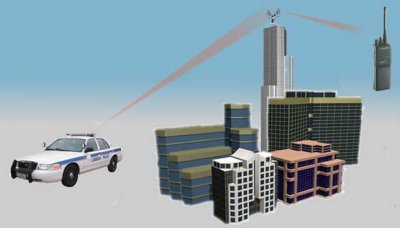
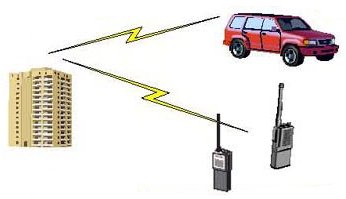
Try to picture that the repeater is like the Sun. You can see it everywhere on one half of this planet, and many, miles out in space. Then use a flashlight to shine a light to someone standing on the Moon. Not going to work very well. This is an extreme example, but to emphasize the power difference between your portable radio and the repeater . Know the general coverage of the repeater you are working. It might surprise you or might disappoint you. This is not like a cell phone. Cell companies install dozens of "tower" stations around your area so at least one will pick up your weak signal. They have lots of money to spend. Hundreds of thousands of dollars. Most Clubs have a few hundred to play with. Private repeaters have less. Most repeaters have ONE site and you need to be close to that one site. SRG has several "receiving" antennas around Spokane so you can get away with the HT. However, there still are "dead-spots". The rest of the state has one "receiving" antenna (for each coverage area) therefore, you would be best to use a mobile running at least an ERP of +44 dbm with a good, outside antenna. (for math challenged folks that's more than 25 watts at 50 ohms). There's nothing wrong with experimenting, just keep in mind it is annoying for others to listen to a "scratchy" (noisy) signal from you lasting more than a few minutes. Also, be aware some of these cheap Chinese radios have low mic audio; that combined with a weak carrier can be tough to understand you. But give it a try and if in doubt ask for a signal report from a CO (control operator) or qualified amateur listening on the repeater.
As mentioned above; when you email for the access information be sure to mention you have read this FAQ. That will make the process quicker.
Rules for operations (you need to read this). Guidelines Optional good ideas and suggestions. Access information request page.
I hope you enjoy the repeater. It's taken many years to get it to where it's now.
'73, Karl Shoemaker, AK2O